Zareth Irwin, MD · Leadership, Executive & Physician Coach · Irwin Clarity Coaching
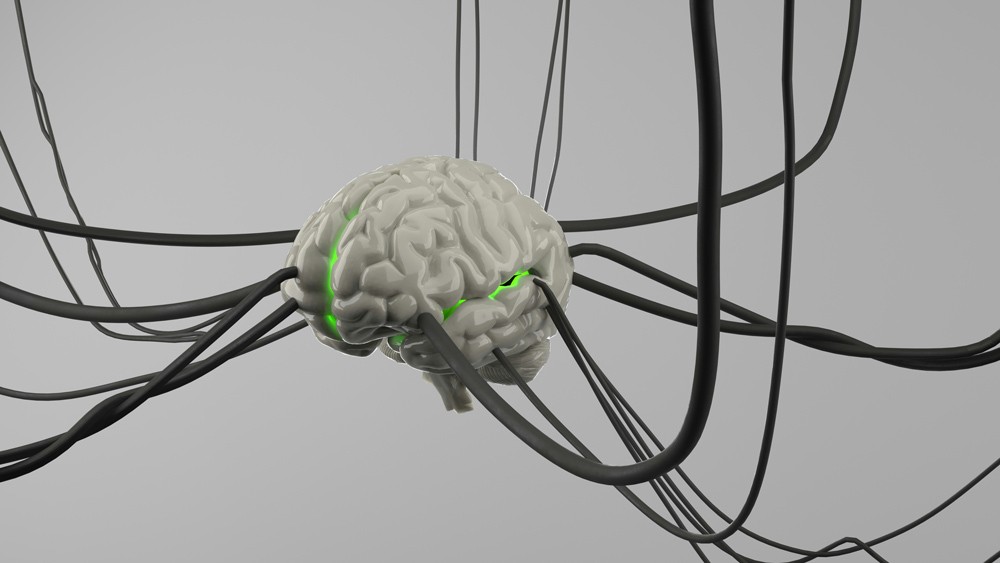
In medical school, I was taught that the adult brain only atrophies but otherwise does not change. You were born with your neurons. You would slowly lose them. The architecture was fixed. That was the story. It was also, as it turns out, profoundly wrong.
What neuroscience has revealed in the decades since is something far more remarkable, and far more relevant to every leader I work with: the brain is not a static organ. It is a living, adaptive structure — one that is continuously being shaped by what you do, what you think, what you practice, and the environments you choose to place yourself in. This is neuroplasticity. It changes how we should think about growth, leadership, and the limits of who we are.
The Brain That Rewires Itself
Neuroplasticity is the brain's capacity to reorganize its own structure. To form new neural connections, strengthen existing pathways, and prune the ones that go unused. It happens at the synaptic level, in the microarchitecture of how neurons talk to each other, in response to our experiences.
The foundational principle, attributed to Canadian psychologist Donald Hebb, is elegantly simple: neurons that fire together, wire together. Every time you think a thought, practice a skill, or engage in a particular kind of interaction, you are reinforcing, and literally expanding the neural circuitry that supports it. Repetition is not just psychological habit. It is biological architecture.
The inverse is equally true. Neural pathways that fall into disuse weaken and eventually prune. The brain is ruthlessly efficient. It will not maintain infrastructure that isn't being used. This is not a flaw, it is efficiency. But it means that passivity is not neutral. You are always either building or allowing things to decay.
Experience Changes the Physical Brain
The evidence for this is not abstract. Some of the most compelling data comes from studies of professional musicians, where years of deliberate practice produce measurable expansions in the cortical regions governing fine motor control — differences visible on MRI. London taxi drivers, who spend years navigating one of the world's most complex street maps, show structural enlargement in the hippocampus, the brain's spatial memory center. The brain, shaped by the demands placed upon it, responded with physical change.
The relationship also runs in the opposite direction. Chronic stress floods the brain with cortisol, which over time damages neurons in the prefrontal cortex- the region governing judgment, planning, and self-regulation- and in the hippocampus, which is critical for learning and memory consolidation. A brain marinated in chronic threat does not just feel different. It becomes structurally different, in ways that impair precisely the cognitive capacities leaders most need.
Environment, in other words, is not backdrop. It is input. And the brain is taking notes.
What This Means for Leaders
Most of the leaders I work with arrived at their positions through extraordinary intellectual and clinical effort — years of training, pattern recognition accumulated across thousands of cases and decisions, expertise purchased at real cost. That expertise is real. It is also encoded, quite literally, in the structure of the brain.
But here is what many of them have not considered: the same mechanism that built that expertise can build new capacities — or can calcify the patterns that no longer serve them.
A leader who has spent two decades in reactive, high-intensity clinical environments has a brain that is exquisitely tuned for threat detection, rapid decision-making, and individual execution. Those are genuine strengths. They are also, in an executive context, sometimes the wrong instrument for the job. Strategic patience, systems thinking, tolerating ambiguity without immediately resolving it- these require a different kind of neural engagement. And the brain can learn it. But only if you deliberately provide the experiences that build it.
Building a Brain That Serves Your Leadership
If experience shapes neural architecture, then the experiences you choose — deliberately, intentionally — are acts of self-authorship at the biological level.
1 Deliberate Intellectual Stretch
Learning something genuinely new, not adjacent to existing expertise, but unfamiliar, activates neuroplasticity in ways that routine work does not. Reading across disciplines, engaging with ideas outside your domain, taking on projects that require you to be a beginner: these are not diversions from your development. They are the mechanism of it.
2 Reflective Practice
Journaling, coaching, meditation, structured debriefs… any practice that asks you to examine your own thinking activates the prefrontal cortex and builds metacognitive capacity. When you slow down and observe your own patterns, you are reinforcing the neural circuitry of self-awareness itself, making it more accessible under pressure.
3 High-Quality Human Connection
Deep, reciprocal relationships activate the brain's social circuitry in ways that promote learning, resilience, and emotional regulation. Isolation, even voluntary isolation, does the opposite. The quality of your relationships is a health variable for your wellbeing, physical health, and brain.
4 Physical Movement
Exercise is one of the most robustly supported neuroplasticity interventions we have. Aerobic activity promotes hippocampal neurogenesis, elevates BDNF, and improves prefrontal function. A leader who moves their body is actively maintaining the cognitive substrate their leadership depends on.
5 Rest and Sleep
The brain consolidates learning, clears metabolic waste, and reorganizes synaptic connections during sleep. Chronically sleep-deprived leaders (e.g. me for 20+ years) are not just tired they are operating on hardware that is actively degrading its own filing system. Rest is not recovery from leadership. It is part of the biology of it.
The Architecture of Who You Are Becoming
Change is real. Plasticity is real. But it requires deliberate effort, sustained over time, in the presence of the right conditions to get the desired outcomes. The brain does not reorganize itself because you want it to. It reorganizes itself in response to repeated experiences that demand it.
What I find most compelling about neuroplasticity is this: it means that who you are as a human, leader and physician is not fixed. It also means that who you are becoming is being decided, in every moment by how you are spending your attention. The brain is always updating. The question is whether you are choosing the update or letting it happen by default.
You are not just building a career or an organization. You are, at every moment, building a brain.
You are not just building a career.You are building a brain.Build it deliberately. |